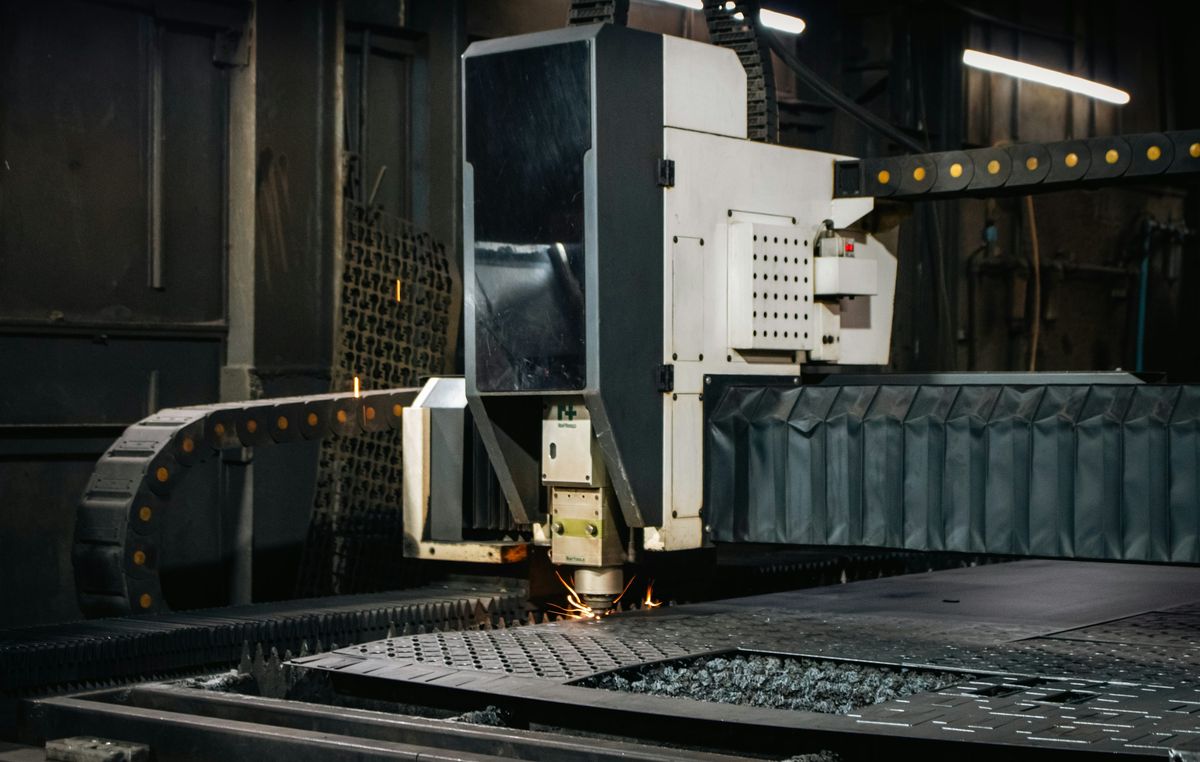
TRUMPF has introduced a 50 kW fibre-laser cutting machine for heavy-gauge sheet and plate, extending its two-dimensional laser cutting range into work that often needs slower, more specialized processing. The TruLaser 8000 Power Edition was announced at EuroBLECH on October 21, 2026.
The new system more than doubles the highest laser output previously offered in TRUMPF's machine-tool portfolio, according to the manufacturer's October announcement. Its headline application is sheet up to 80 mm thick, for heavy equipment, structural and plant fabrication, service centres and other thick-plate operations. Those are supplier-stated limits, not independent cutting trials across every alloy and grade.
Power alone does not set how quickly a laser processes a job. Material grade, edge quality, gas supply, pierce method, part geometry and downstream finishing all shape the economics, so the useful question is where the machine can replace or complement existing capacity at the required finish and dimensional quality.
Sheet formats from 3 × 1.5 m to 8 × 2.5 m
TRUMPF lists those working sheet dimensions depending on machine configuration, and not every option, thickness and material is available in every format. The company emphasizes work from roughly 10 mm thickness upward, even though the 80 mm maximum is the specification most likely to attract attention.
The release gives no matrix of cut speeds, assist gases, edge roughness, taper measurements or tested grades for comparing the machine with a particular incumbent system. A power rating and a thick-section limit do not substitute for application trials and a complete process quotation.
A structural-steel fabricator and a stainless processor need different edge conditions and follow-up operations. A throughput comparison should include piercing, rapid moves, nesting, unloading and surface finishing, not just metres of straight cut per minute; these caveats are editorial analysis, not TRUMPF-reported values.
Factory visibility is part of the proposition
The TruLaser 8000 Power Edition adds cameras covering the machine interior, the cutting zone and the pallet changer. According to TRUMPF, operators can view live feeds remotely and see machine-state information, remaining run time and notifications on an additional control-panel screen, to help staff supervise several machines and find stoppages faster.
Camera coverage shortens the time to understand what happened on an unattended line, but remote observation does not resolve faults or make a system safe for unattended operation, which still depend on plant procedures, safe access, integration and maintenance. The announcement gives no measured increase in availability or overall equipment effectiveness.
The same visibility functions appear on TRUMPF's new TruLaser 5000 generation, also shown at EuroBLECH, which suggests the larger platform is being marketed as a production system rather than a high-power laser source in isolation.
The business case remains application-specific
High-power cutting suits heavy components that otherwise need a separate process stage, or long runs that justify dedicated capacity. The most powerful configuration does not automatically improve productivity on thinner material, and cost per acceptable part also depends on energy, consumables, gas, service, floor space and material handling.
TRUMPF disclosed no pricing, payback period, representative operating costs or side-by-side cutting study in the October release, so its description of economical cutting is a claim buyers must validate on their own material mix. Published figures should distinguish the maximum cuttable thickness from the thickness at which a target quality and throughput hold.
The Power Edition will also appear at TRUMPF's INTECH house exhibition in April 2027. The unresolved question is how consistently a 50 kW option with a large sheet envelope and expanded monitoring turns into faster, acceptable finished parts in individual factories.