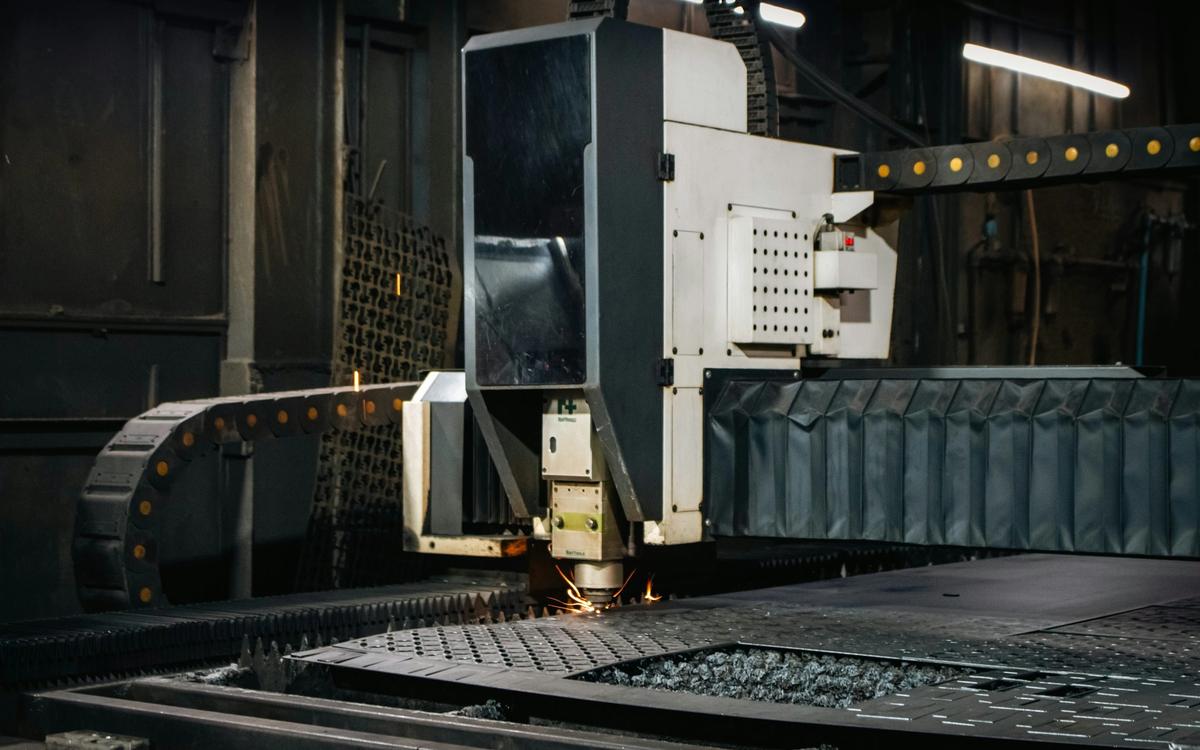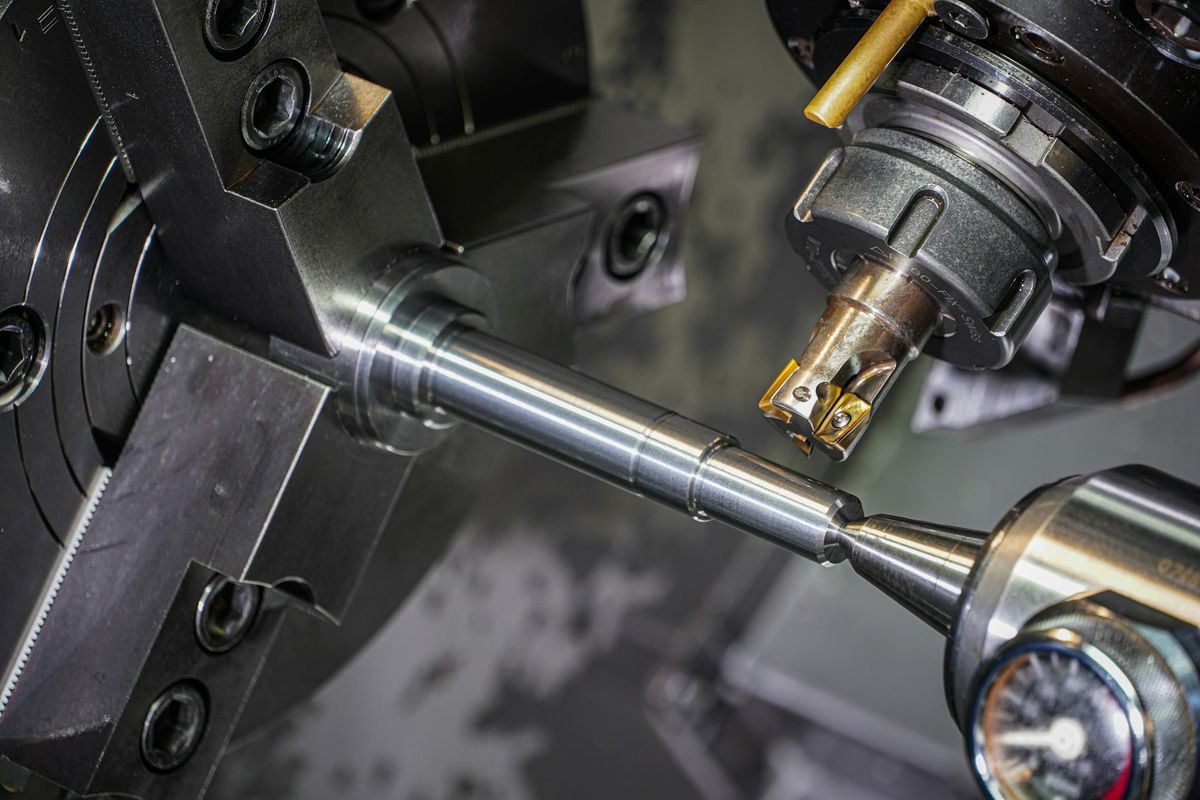
Spindle health is often inferred from sensors mounted outside the structure that produces the signal. NTN is moving the sensing point closer to the machine-tool spindle bearing itself. Its October 20 Japanese announcement introduced a sensor-integrated bearing unit for machine-tool spindles, with order-taking activity starting around JIMTOF 2026, which opened October 26.
The unit incorporates temperature, vibration and load sensors into a spacer adjacent to spindle bearings. The spacer arrangement is central to the product: it brings measurement physically closer to bearing loads while preserving a mechanical interface within the spindle assembly.
A sensor near the bearing narrows uncertainty but still needs interpretation
Temperature and vibration are familiar condition-monitoring signals, but interpreting them requires more than recording a single threshold. Bearing temperature depends on speed, lubrication, preload and heat transfer. Vibration may reflect rotating imbalance, chatter, structural response or developing bearing damage.
A sensor near the bearing can help reduce some uncertainties introduced by an external mounting location, although it cannot remove the need for calibration and signal interpretation.
Load sensing may extend from bearing diagnostics to the cut itself
NTN's English product account says its development initially concentrated on equipment abnormalities and predictive maintenance. During later testing, the company increased load-sensor sensitivity so that fluctuations under light-cutting conditions became more detectable. NTN consequently identifies monitoring of the machining operation itself, not only the bearing, as an additional possible application.
That distinction matters for shops using finishing passes or low-force cutting. Small force changes may be difficult to separate from background behavior with sensors located on the machine housing. Measuring nearer the bearing can provide an additional observable quantity, but the information still needs to be associated with spindle speed, tool engagement, cutting parameters and the machine's baseline behavior.
NTN cites feedback from demonstrations indicating that tool-workpiece contact and certain workpiece abnormalities could be noticed more readily. Those comments are manufacturer-reported observations without published machine configurations, sample sizes, error rates or controlled comparisons.
They should not be interpreted as a verified improvement in part tolerance, tool life or overall equipment effectiveness across different machine models.
Integration remains a spindle-design question
In its JIMTOF exhibitor information NTN also describes self-power generation and wireless communication intended to avoid additional wiring. Such arrangements may help with the packaging challenge inside a rotating or densely assembled spindle. They also raise practical validation questions concerning electromagnetic interference, transmission reliability, power availability and compatibility with existing spindle dimensions.
For retrofit work, the presence of a spacer in an assembly is not enough to guarantee the new unit will fit.
Spindle bearing arrangement, available axial space, contact angles, preload management, thermal behavior and machine-tool OEM approval may limit applicability. The public product announcement does not publish a universal interchangeability list or a complete spindle-model compatibility matrix.
The signals only help with a data path and reference states
The sensing package also requires a data path to an actual condition-monitoring or process-analysis system. Continuous signals can produce useful trends only when an operator or monitoring application has reference operating states and a method for distinguishing expected changes from faults. A load signature generated by one toolpath should not be generalized to an unrelated material or cutter geometry.
NTN positioned the unit for order-taking at the October JIMTOF event rather than reporting large-scale customer deployment. No independent long-term reliability study or quantified cost-benefit comparison accompanied the public launch.
For machine-tool builders, this offers a way to observe behavior that is otherwise partly hidden inside the spindle. The next meaningful evidence will come from production tests showing how the sensor-integrated unit performs across spindle speeds, cutting loads and faults without compromising the bearing system it is intended to monitor.