FANUC presented AI Masterless Vision in an October 27, 2026 product update as a way to reduce one of the recurring setup tasks in robotic machine tending: teaching a camera how each new workpiece should look before the robot can pick it. FANUC linked the system to demonstrations during JIMTOF 2026, held October 26–31 at Tokyo Big Sight.
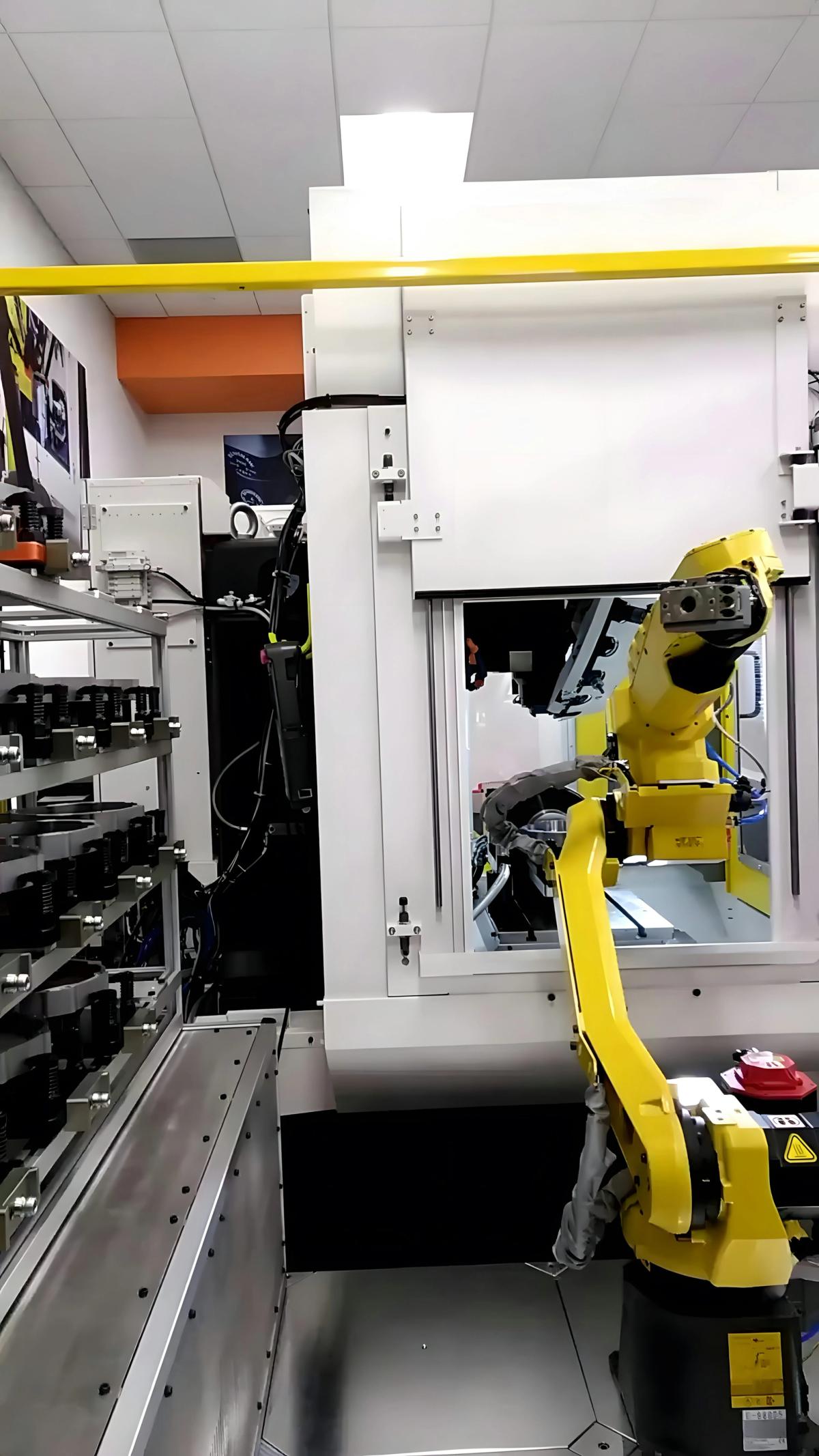
The manufacturer's announcement describes a robot that can respond to a general object instruction, such as identifying a cylinder, then locate previously unseen cylindrical workpieces in camera images. In the JIMTOF example, the system was set to select and handle different cylindrical materials for loading and unloading a demonstration lathe.
This is a robot-vision development, not a new CNC controller or FANUC's separately reported Physical AI CNC digital-twin work. AI Masterless Vision attempts to replace repeated vision registration and part-specific teaching for selected object classes.
Recognizing an unfamiliar part is only the first motion step
FANUC says its AI has learned to recognize geometric appearances under varying light conditions, including some glossy, reflective and transparent objects that conventional vision setups find difficult. The official statement does not publish an independently measured detection rate by material or lighting level. It therefore supports an attributed capability claim, not universal immunity to glare, occlusion or ambiguous surface features.
A workpiece must be identified and localized before it can be grasped, but machine tending also requires a reliable approach path, gripper selection, grip verification, clearance around the chuck and confirmation that the machine is ready for loading. An incorrect part pose can create a collision even when a vision system identifies the intended class correctly.
No vision teaching does not mean no commissioning of the robot workcell. The cell's safe geometry, grip, fixture and destination still have to be defined, and robot motion still depends on coordinate calibration, machine interface signals, safety boundaries and verification of the operation after handling.
A new part type may call for a different gripping tool or process recipe even if the camera recognizes it on first sight.
A live demonstration so far, with shipments planned for January 2027
FANUC's October materials describe a live JIMTOF demonstration rather than independently audited multi-shift production data. The depicted task places workpieces in front of the robot to be picked and passed to a lathe chuck, a comparatively well-defined handling sequence. A useful follow-up test would include partial occlusion, mixed part sizes, reflectivity variations and rejects that resemble acceptable pieces.
The manufacturer lists January 2027 as the start of shipments. That is a planned future availability date as of the October 27 announcement, not evidence of general commercial deployment or a guaranteed customer commissioning timetable.
For machine shops with frequent part changes, reducing the time spent registering new workpiece appearance could be significant, particularly when loading hardware and process interfaces are already stable. The commercial value can only be judged after measuring actual changeover effort, unsuccessful picks, recovery time and the boundary between vision setup and the rest of robot programming.
Until then, the evidence supports the concept and the shipping plan, not setup-free handling of every unfamiliar part.