A generative-AI system that suggests changes to a CNC program is not equivalent to a machine control that can safely execute those changes on its own. FANUC's Physical AI CNC presentation at JIMTOF 2026 centered on that distinction: AI assistance is connected to machine and simulation information, while proposed changes are checked in a digital twin and reviewed by the operator before they are applied.
In its official technology overview, FANUC describes Physical AI CNC as a connection between CNC, its Smart Digital Twin and generative AI. The company proposes a Model Context Protocol (MCP) server to let AI applications access selected information and tools. MCP is a software interface protocol; it is not a machine safety standard and does not automatically authorize an application to write to a real control.
The importance for machine builders is access to context. Machine alarms, axis and servo information, the current NC program and a simulated model of machine behavior can be relevant to diagnosis. A language model working without that context might produce a plausible-sounding but inapplicable recommendation. FANUC's architecture is intended to give AI a bounded way to use relevant tools and evidence.
Three examples at the exhibition
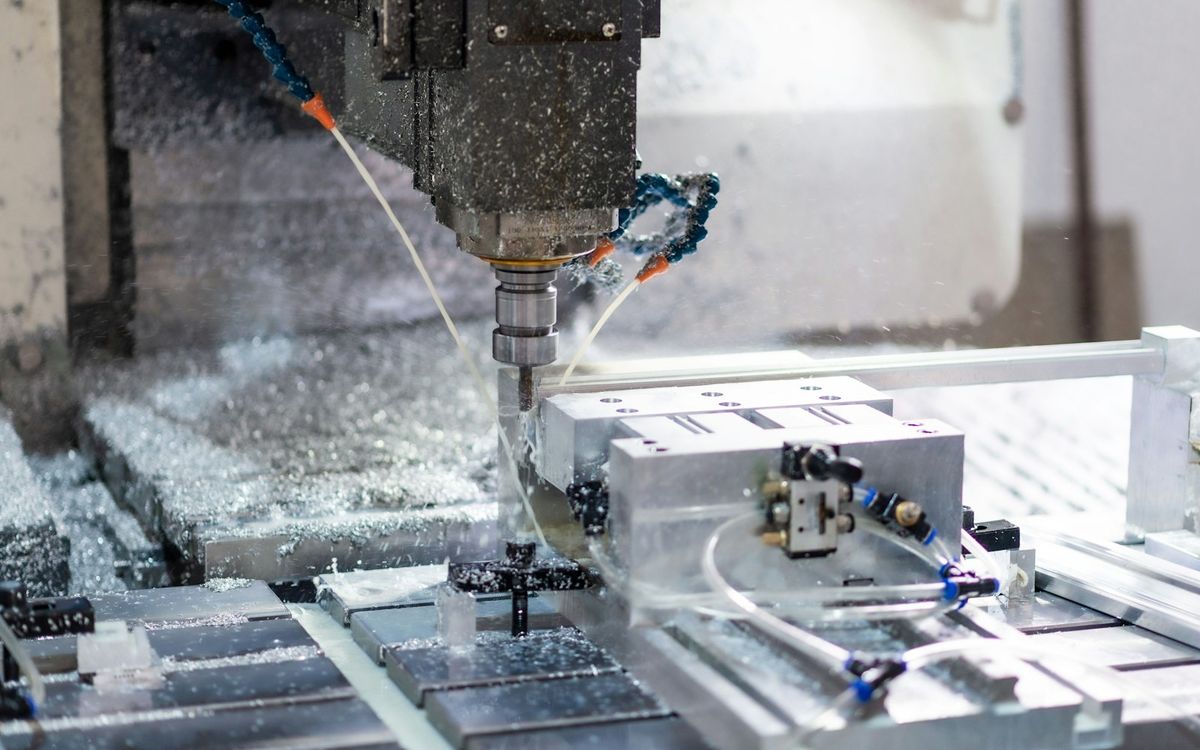
In firsthand reporting published October 30 by MONOist, reporter Masahiro Nagasawa described a machining-surface tuner demonstration. It used servo data and an NC program to analyze visible machining marks, propose possible adjustments to acceleration or deceleration behavior, evaluate the changes through simulation and produce an amended program. That sequence is a demonstration of assisted troubleshooting, not independently established improvement across different machines and part geometries.
A second example, an AI alarm-diagnosis navigator, examined a CNC alarm and operating state, reasoned through possible countermeasures and showed an operator a proposal after simulation. This is not the same as a verified autonomous recovery from every alarm. A real stoppage could involve broken tooling, clamping, chip buildup, guarding or a mechanical fault that a software-only diagnosis cannot safely clear.
The third demonstration converted tablet handwriting into decorative engraving patterns and a laser machining path, with the planned operation displayed for review before an operator approved execution. This illustrates the reach of natural-language and image-based interaction into program preparation. It does not imply that an AI-generated trajectory is automatically correct for a different laser, machine envelope, material or process.
Simulation and approval have separate jobs
FANUC says suggested changes can be verified in FANUC Smart Digital Twin before a user confirms execution. A digital twin can expose certain collisions, path problems or expected dynamic effects when its model and initial conditions are accurate. It does not provide absolute assurance about a real workholding setup, tool failure, unexpected workpiece geometry or every failure mode outside the modeled environment.
An operator approval step keeps a named decision point in the workflow. For a CNC shop, that is meaningful only when the operator can see what the AI proposes, understand the simulation's coverage and reject an inappropriate action. The exact controls governing access, authorization, data logging and rollback will matter when equipment builders develop applications using the interface.
FANUC's own JIMTOF exhibit page listed Physical AI CNC alongside Smart Digital Twin and its new CNC and servo products. The event organizer's workshop program also scheduled a FANUC discussion on intent-driven manufacturing on October 30. These records establish the exhibition context, but they do not assign a date of commercial availability or certify the combined system for unattended production.
The implementation question
The next stage is not simply making AI responses more fluent. It is specifying which machine states AI may read, which edits it may propose, what simulation tests must pass and who authorizes any change. A robust deployment would also require application-specific access permissions, version control for programs and test evidence under representative machining conditions.
The October 30 presentation offers a more bounded vision of industrial AI than a self-driving CNC narrative: a model assists analysis, a digital twin checks proposals and a person authorizes the change. FANUC has described the architecture and demonstrations, not proven that every suggested intervention is safe or useful in a production shop.