North American customers ordered 10,989 industrial robots worth $723.5 million in the third quarter of 2026, according to the Association for Advancing Automation's market report published October 28. Unit orders were 24.8% higher than a year earlier and order value increased 26.1%.
It was the strongest quarter of 2026 to that point, but the distribution of orders offers a more informative view than the overall percentage.
Across the first nine months of 2026, the association recorded 28,984 units with an order value of approximately $1.89 billion. Those totals were 9.6% higher by units and 13.3% higher by value than in January–September 2025. The faster third-quarter gains helped lift the year-to-date totals after a less uniform first half.
These are bookings for robots, not a count of workcells already installed and producing parts. An order may represent a complete assembly-line application, an individual manipulator destined for integration or another industrial system. The report does not translate the totals into completed production shifts, employment changes or measured productivity gains.
Automotive suppliers lead, while demand broadens
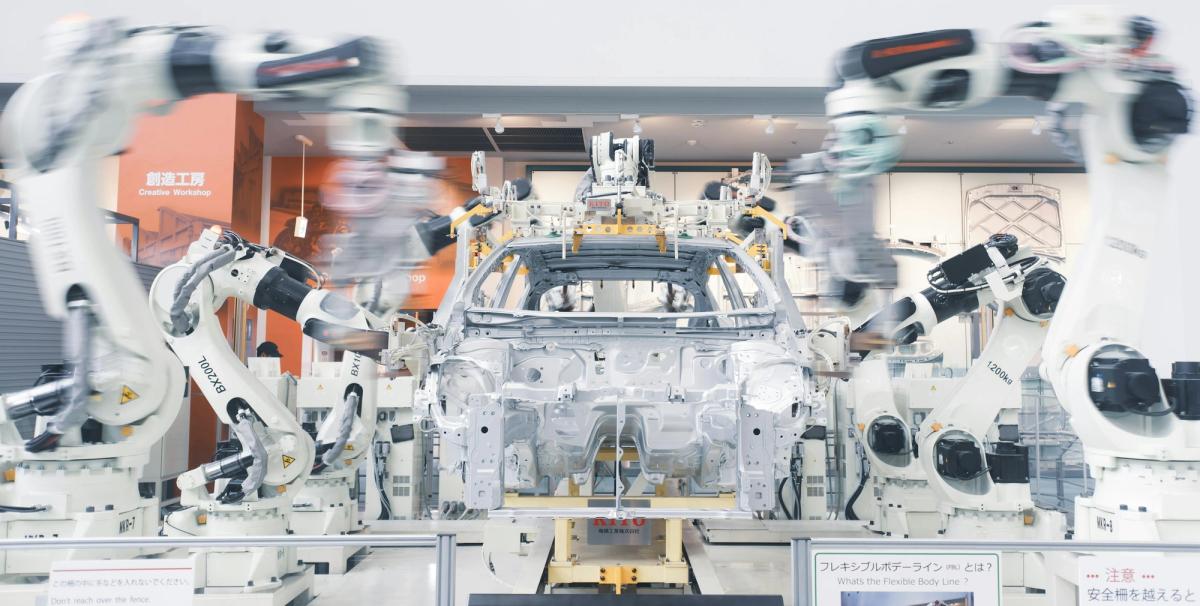
Robot orders from automotive component manufacturers increased 90.4% year on year in the quarter, according to A3's sector breakdown. Orders from automotive original equipment manufacturers grew 7.5%, returning to quarterly growth after earlier weakness; however, the OEM segment remained 17% below its year-earlier level over the first nine months.
The two figures describe distinct customer groups and periods, so they should not be collapsed into a single automotive trend.
Electronics and semiconductor customers recorded a 97.6% increase in units ordered. Plastics and rubber rose 67.7%, life sciences and pharmaceutical manufacturing 38.7%, and metals 37.0%. By contrast, the food and consumer-goods segment declined 23.7%.
The breadth of the increases suggests that the quarter's growth was not confined to automotive plants, but the percentages alone do not reveal each segment's absolute size or its starting base.
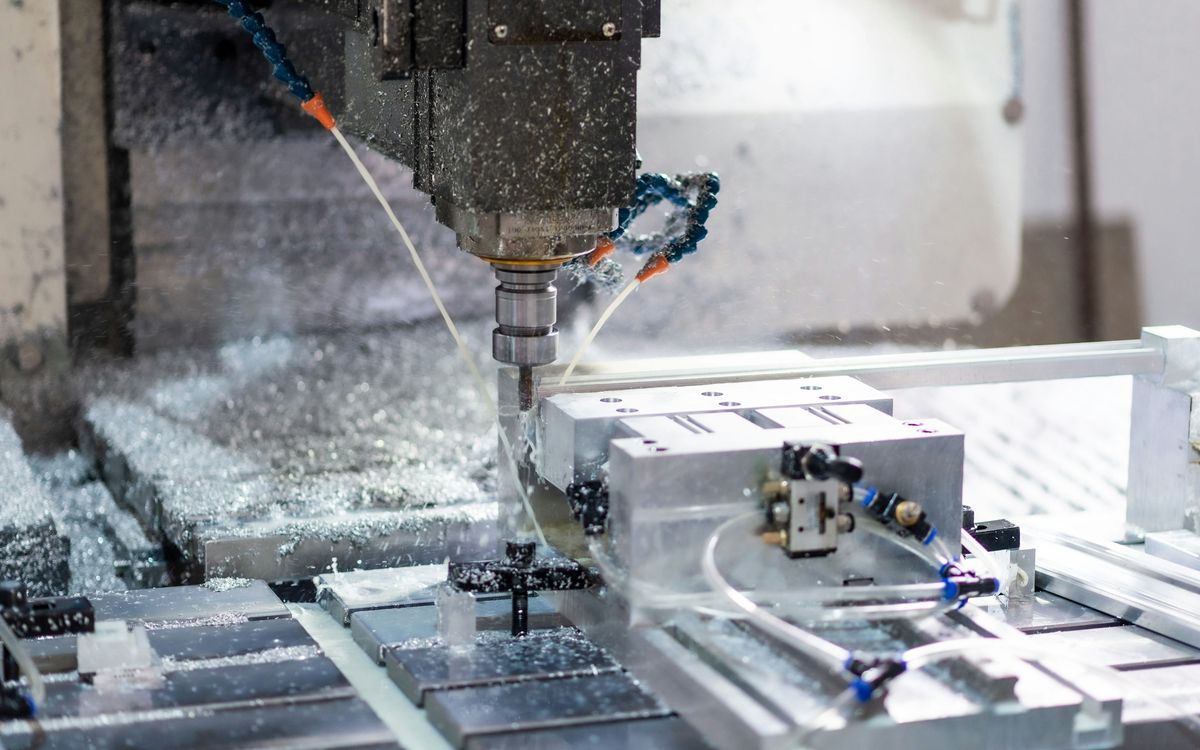
The 37.0% rise for metals is relevant to CNC manufacturers, though only as a broad market indicator. A3 does not break out how many of those robots will tend lathes or milling machines, handle castings, perform welding or undertake inspection. A machine shop should not interpret the metals category as a direct count of new robotic machine-tending cells.
Collaborative robots gain unit share
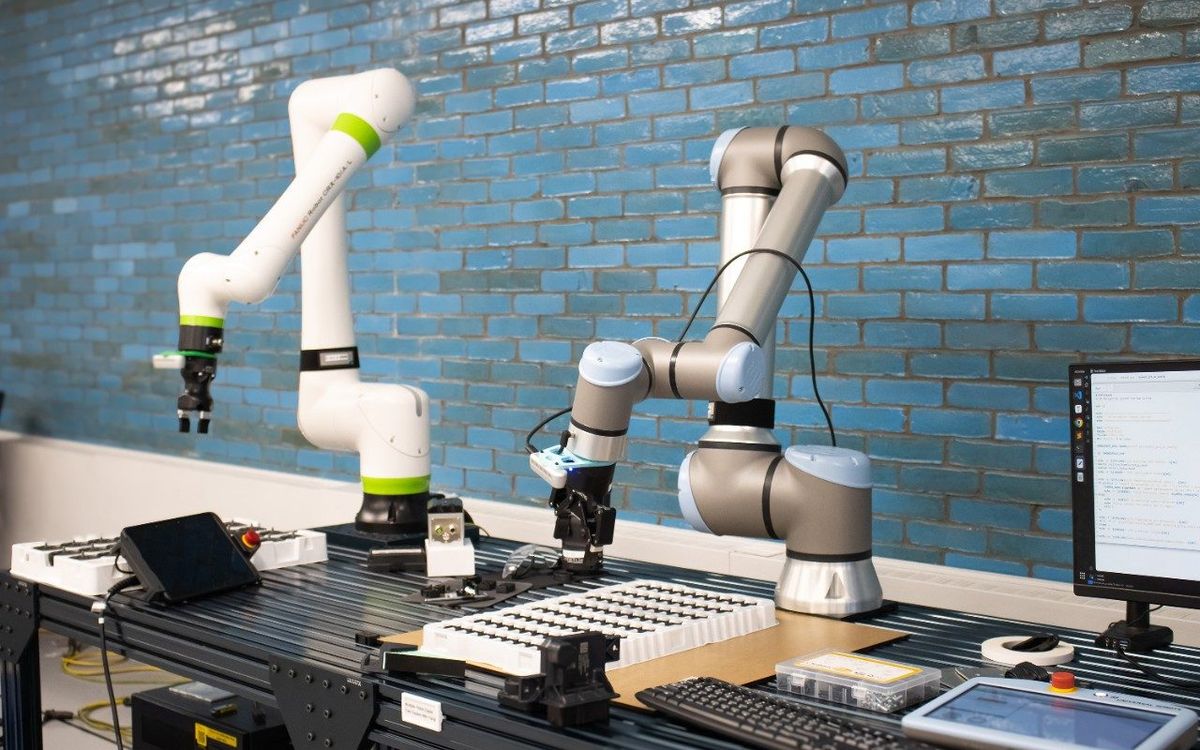
Collaborative robots accounted for 1,831 third-quarter orders valued at $63.8 million. A3 reports approximately 56% growth in collaborative-robot units compared with Q3 2025, with the category representing 16.7% of all robot units ordered.
The value share is smaller than the unit share, reflecting differences in the mix and prices of ordered equipment; it is not a comparison of the final cost of complete installed cells.
Through September, buyers ordered 4,605 collaborative robots worth approximately $178 million, or 15.9% of all robot units and 9.4% of total robot-order value over those nine months. The association also found particularly high collaborative-robot unit shares in life sciences and semiconductor/electronics applications, showing how adoption patterns can differ materially by industry.
The term collaborative describes a class of robot and possible operating approaches, not a guarantee that any proposed installation can operate without safeguarding.
A robot interacting with open machine doors, sharp workpieces or moving fixtures still requires a proper application-specific risk assessment and integration design. A3's ordering statistics do not demonstrate that a given machine-tending cell has met the requirements of any safety standard.
Robot orders do not show a shop's cell economics
For CNC operations, robot demand can signal growing investment in part handling, pallet transfer and repeatable operations adjacent to cutting. But the economics depend on whether a machine accepts a reliable loading interface, whether gripping and workholding tolerate part variation, and whether downstream inspection and chip management sustain unattended cycles. None of those conditions appears in a quarterly robot-orders count.
A system integrator evaluating this market may see more interest across metals and automotive supply chains, but a buyer still needs a cell-specific production baseline. Robot procurement, end effectors, guarding, machine-interface work and maintenance differ greatly between deployments, and even identical robot models can deliver different outcomes on a high-mix job shop floor.
A3's release establishes stronger demand for robot equipment in the third quarter, not a completed automation transformation. The next evidence for CNC manufacturers will come from actual installations, production data and application-level results, not from purchase commitments alone.