A $10 million financing round announced on October 29 puts fresh investment behind a different way of programming industrial controls: engineers describe intended machine behavior in plain English, examine the generated code and test it before deployment. For machine builders and automation integrators, the central question is not whether AI can draft control logic, but how reliably that logic can be validated on real equipment.
California-based Neuron Industries says the oversubscribed seed round was co-led by FCVC and Obvious Ventures, with participation from Y Combinator and other investors. Its company announcement identifies two linked products: the Cortex AI Industrial Controller (AIC), intended as a programmable-logic-controller replacement for machines and lines, and the Synapse development environment for configuring behavior, operator screens and data collection.
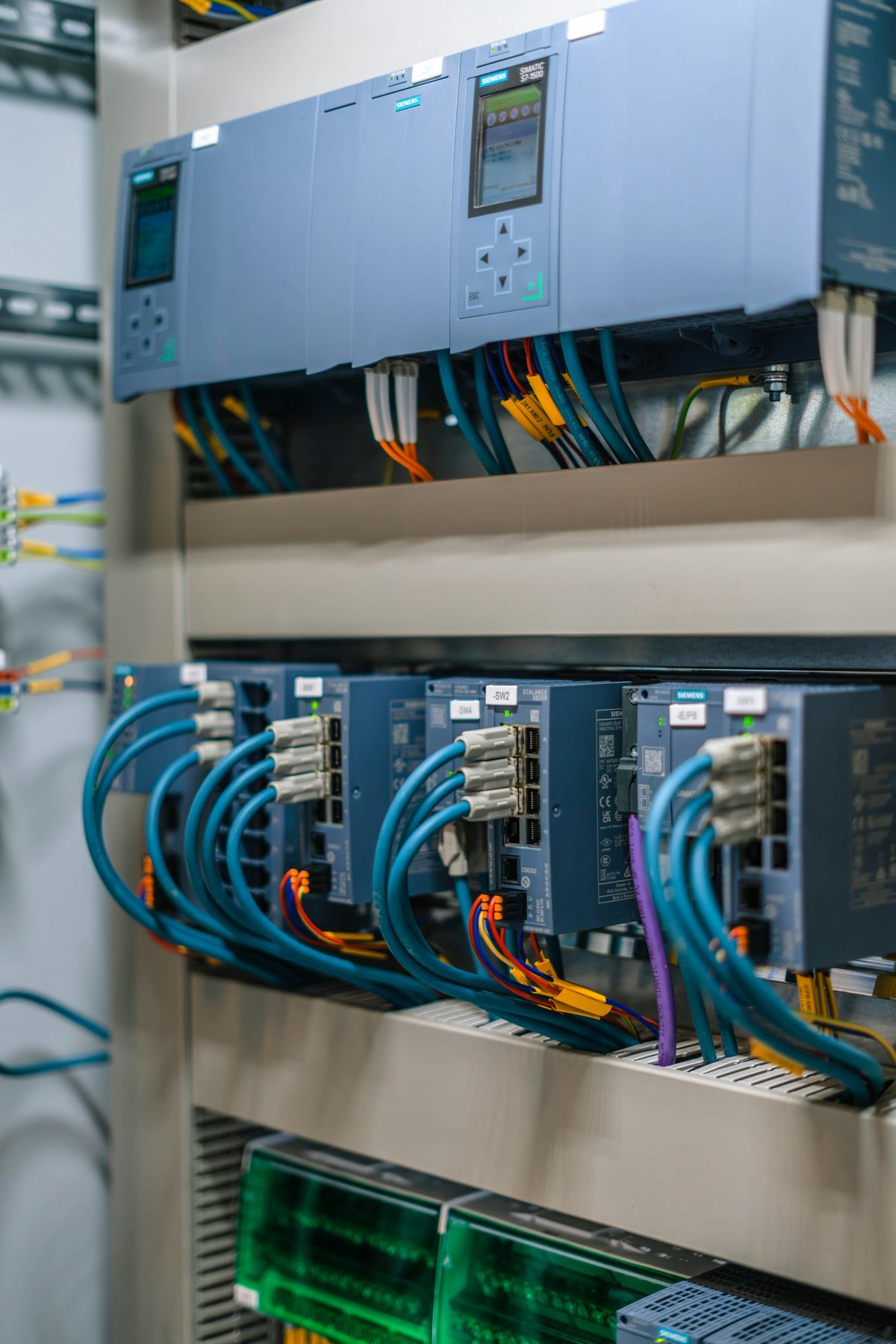
The approach differs from adding a chatbot to an existing engineering workstation. Neuron proposes to combine the control runtime, development interface, human-machine interface (HMI) and equipment data historian on a single hardware platform. Its product documentation describes a browser-based editor served by the controller, with editable Python control logic, simulation tests and local operation without an internet connection.
A PLC replacement, not a demonstrated CNC control replacement
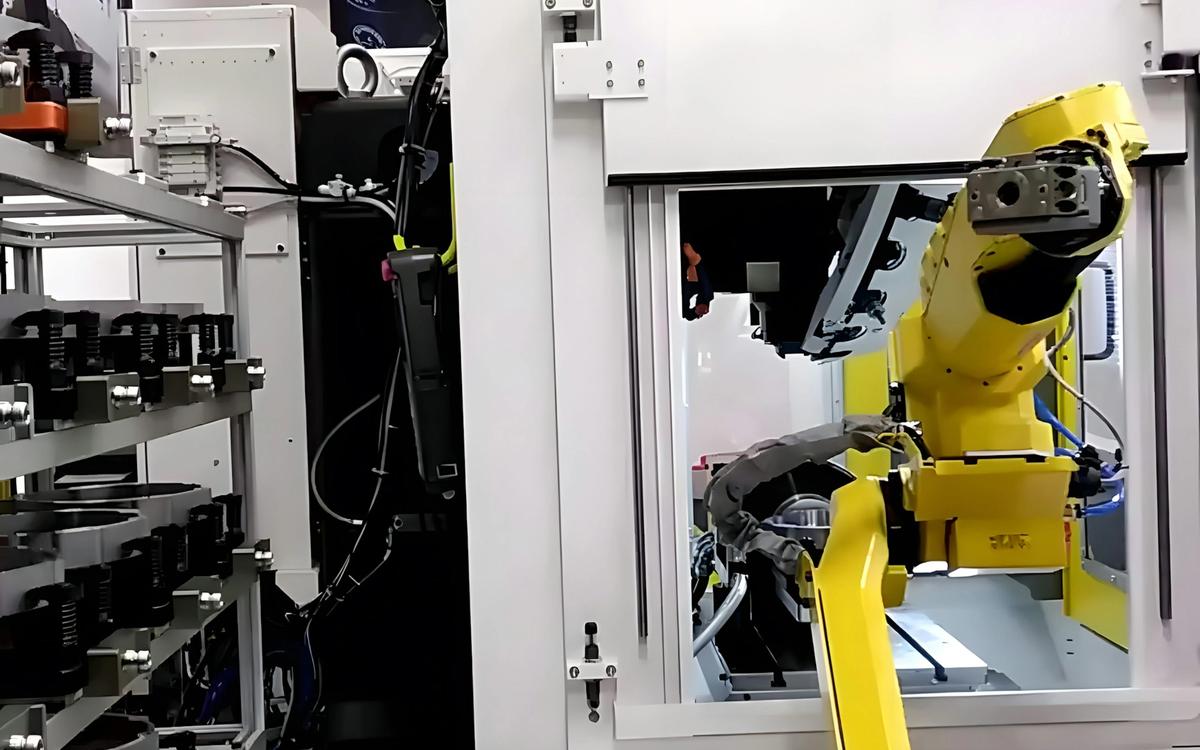
A programmable logic controller (PLC) monitors sensors, actuates valves and drives, coordinates machine sequences and exchanges signals with other controls. Synapse's proposed use is to translate operator-defined requirements into explicit, inspectable control programs. That could be relevant to fixturing, inspection stations, auxiliary handling and robot-tending cells around CNC equipment.
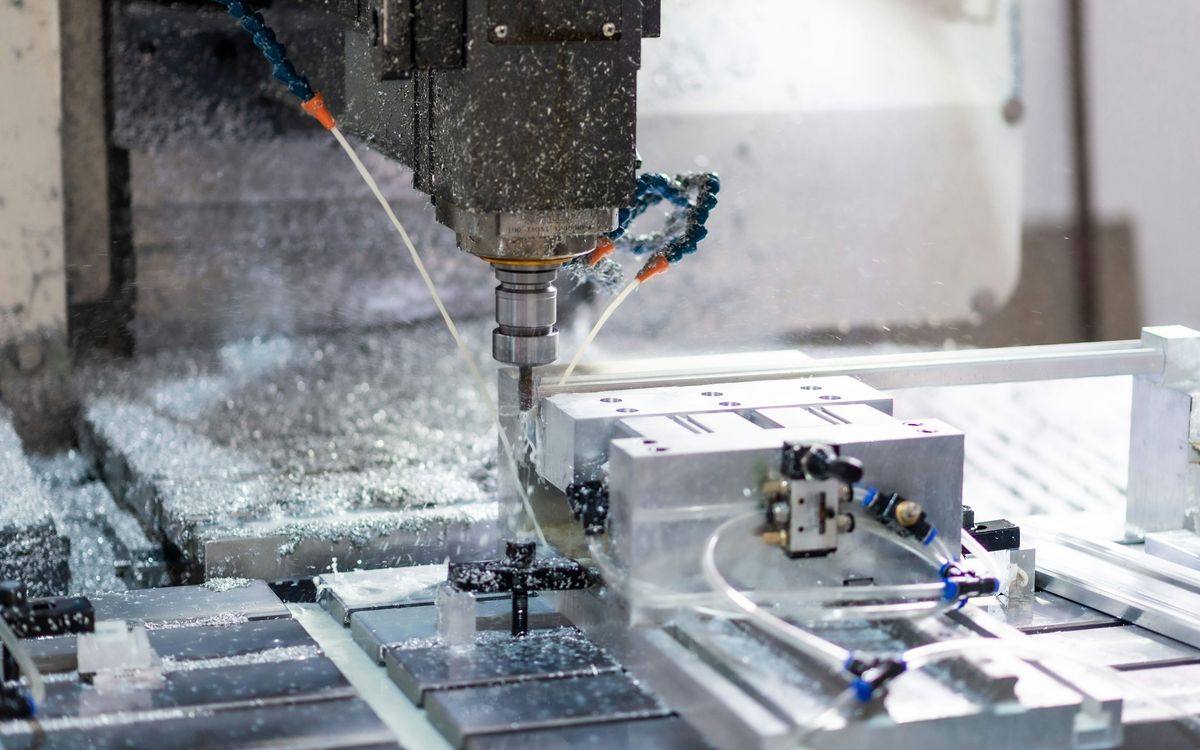
It is not, on the evidence released so far, a demonstrated drop-in replacement for a CNC machining center's proprietary interpolation and safety controls. The company lists industrial communications including EtherCAT, Modbus TCP, PROFINET and EtherNet/IP, but protocol support alone does not establish compatibility with a specific machine builder's controller, servo drive, robot, emergency-stop architecture or validated safety function.
Scan rates are production targets, not independent timing results
Neuron describes two Cortex configurations. Its technical page lists a 1,000 Hz maximum scan rate for Cortex Mini and a 4,000 Hz target for the larger Cortex, with different real-time performance classes and motion provisions. These are supplier specifications marked as production targets, not published results from an independent timing test.
The pages also describe differing safety and certification characteristics, which would require checking the delivered hardware and documentary approvals before any safety-related installation.
The retrofit claim needs its conditions
The October 29 release offers a concrete customer example at CureWood Engineered Building Products, where a 1991 Siemens S5 controller on a finger-jointing line was replaced. Neuron says the project involved 189 hardwired input/output points, about three hours of human–AI engineering work and eight hours of downtime.
It also claims the work was nearly ten times faster than conventional integration. Those times are company-reported results for a particular installation. The release does not provide a like-for-like integrator baseline, a complete acceptance-test record, a breakdown of preparatory engineering or the later fault history.
The case is therefore evidence of a claimed retrofit experience, not a statistically established productivity multiplier for machine builders. Woodworking equipment is also not equivalent to a CNC mill or turning center with multi-axis machining requirements.
Generated tests are only as complete as the conditions they model
The supplier also describes automated unit tests for generated sequences, simulation before deployment and stored versions for restoration. These functions could make review easier, but a generated passing test is only as complete as the conditions, interlocks and failures it models. An integrator still has to validate power-loss recovery, unexpected sensor states, safe stops, communications failures and restart behavior against the actual equipment and applicable standards.
A first-quarter 2027 release target, with CNC compatibility still unanswered
Neuron's announcement targets a Cortex release in the first quarter of 2027 and says the company plans to add US production capacity afterward. This is a future commercialization target, not evidence that standardized controllers are already shipping at volume. The company has not published independent field reliability statistics or a documented CNC-machine compatibility matrix.
The potential appeal is clear: machine builders could keep logic, operator displays and plant data in one development environment instead of maintaining several vendor-specific tools. The outstanding procurement question is equally specific: whether a delivered controller meets the required timing, cybersecurity, safety, service and commissioning needs of the target machine.
For CNC users, any claimed labor saving remains conditional on that technical evidence.