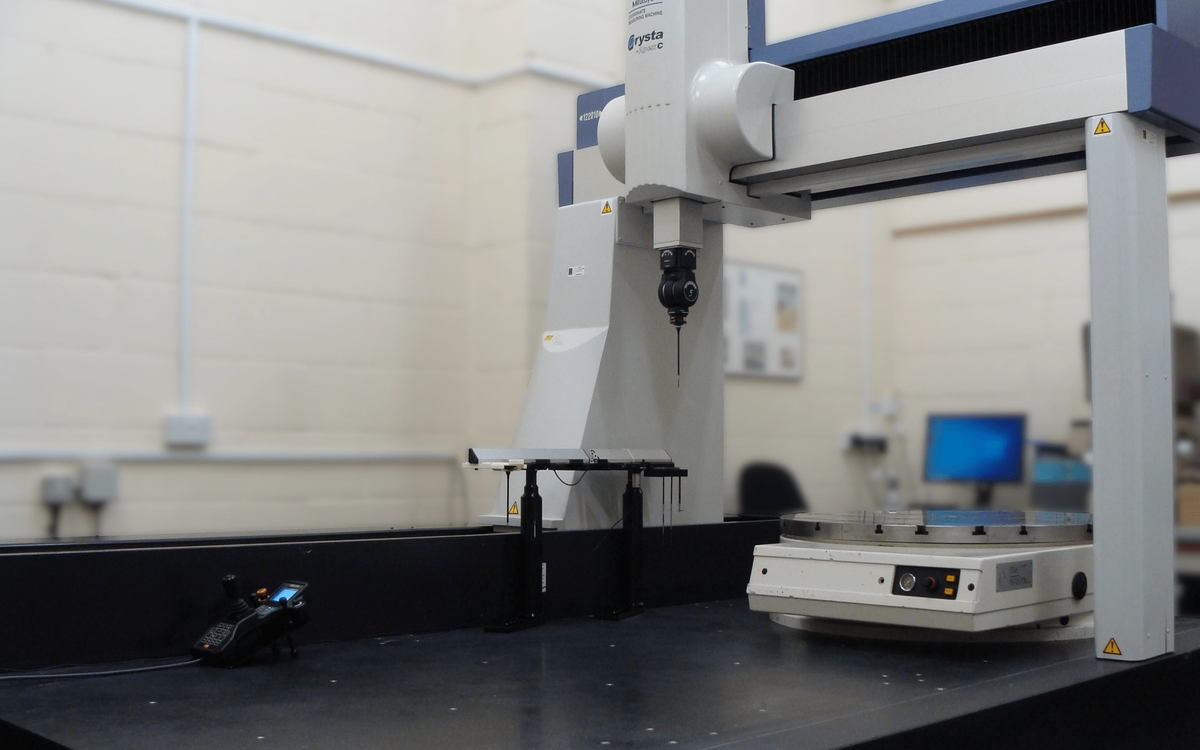
LK's CAMIO 2026 release makes Renishaw's REVO five-axis scanning technology available through the I++/DME communications approach. That is as much a software-interoperability development as a measurement-speed story, particularly for manufacturers running several CMM brands.
LK describes compatibility through the I++/DME client-server architecture. CAMIO communicates as the client with a compatible UCC controller server over a standard network connection. This approach can reduce the dependence on a proprietary measurement-programming environment and help an inspection team maintain a more consistent interface across equipment.
REVO can coordinate rotary head movement with CMM axes during measurement, offering strategies such as sweep scanning and head touches. These methods can reduce heavy linear movement of the machine structure in selected applications. The benefit is not automatic for every feature; measurement path, probe type and accessibility still determine whether a faster strategy is appropriate.
Five-axis probe motion should not be confused with five-axis machining. In metrology, coordinating a scanning head with the CMM axes allows a sensor to follow complex surfaces while maintaining an appropriate measuring orientation. That can change the number of reorientations and reduce time spent moving the heavy machine structure. But the software must still establish safe clearances and choose a scanning strategy suitable for the selected stylus and surface. Faster head movement has limited value if a program cannot be validated to the required uncertainty.
Head motion and machine motion are different resources
Standards-based communication does not mean every function behaves identically on every CMM. Engineers still need to confirm the controller version, supported sensors, probe calibration and the machine's own measurement capability. Some features of complex scanning systems may require exact software and hardware combinations before they can be deployed safely. The interoperability claim also requires a practical test. I++/DME provides a common communication route, yet controller-specific behaviour and machine constraints still need checking. A company with several CMM brands should verify that the same approved feature definitions and reporting conventions are maintained when programs are adapted between instruments. This prevents the apparent convenience of one software platform from obscuring differences in actual measurement capability or calibration requirements.
The business reason to adopt a common programming environment is operational consistency. A team with several CMMs may find it easier to train operators, maintain inspection templates and distribute workload if programs can be prepared using familiar methods. But common software alone does not make programs interchangeable without checking machine volumes, fixtures and measurement uncertainties.
LK also describes offline programming, allowing a programmer to plan and check routines before moving them to a physical CMM. Collision checking and virtual path validation can reduce development interruptions, although the real process still requires commissioning on the equipment.
The worthwhile test is a real inspection program migrated or prepared across the compatible machines, with feature results, calibration and collision behavior checked after the transfer. CAMIO's release offers a route toward less duplicated programming, but the qualification belongs to the specific CMM and controller combination.