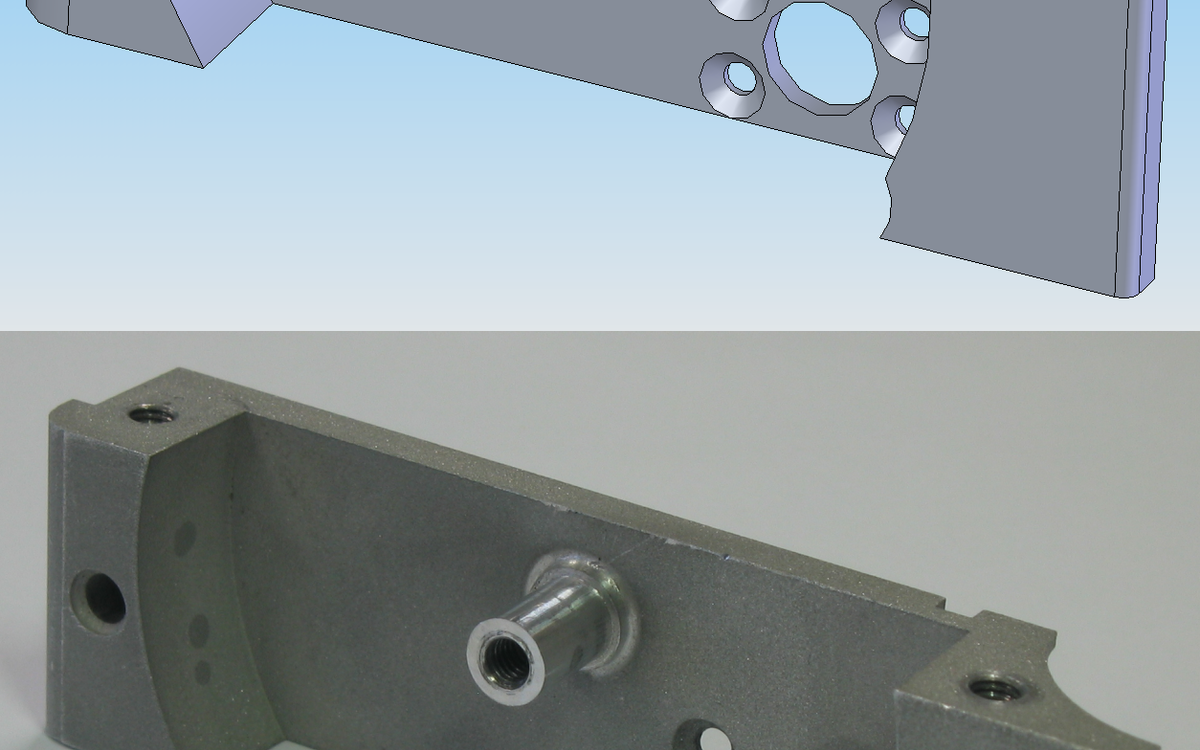
Kennametal introduced KAF82 on September 15, 2026, describing it as an additively manufactured tungsten-carbide grade for custom metal-cutting tools. The development is aimed particularly at hole-finishing applications that can benefit from complex internal coolant channels and shapes difficult to produce using conventional toolmaking.
Kennametal says its vertically integrated powder-processing and sintering capability can shorten the development of certain custom tools from months to weeks. That is a company claim about its process, not a delivery guarantee for every application.
Why additive manufacturing matters for a cutting tool
A custom cutting tool is constrained by much more than its external cutting edges. Coolant access, flute geometry, internal passages, stiffness and the available toolholder interface can determine whether a difficult bore or deep feature can be machined reliably. Conventional manufacturing methods can limit the shape of internal channels, especially within hard materials.
Additive manufacturing may expand the design space, but a useful tool still needs the density, strength, dimensional stability and edge preparation expected of a production carbide component.
Kennametal describes KAF82 as a fully dense grade of tungsten carbide and identifies binder-jet additive methods within its wider manufacturing capability. The company states that two major automotive manufacturers have already adopted custom KAF82 tooling in production. These references indicate practical deployment, but the release does not publish a controlled public comparison of tool life, surface finish or cost for a specific component. The outcome should therefore be described as reported adoption rather than independent proof of superior performance.
From geometry freedom to machining performance
The most interesting potential is cooling directed toward hard-to-reach cutting zones. Coolant passage placement can affect chip evacuation and heat distribution in hole-finishing work, particularly where long tool engagement or small clearances make the process sensitive to interrupted flow.
However, internal geometry is only one part of tool performance. Grades, edge coatings, chip formation, fixture rigidity, runout and machine pressure all matter. A new coolant channel is not enough, on its own, to establish a faster or more repeatable machining cycle.
Additive manufacture also changes the tooling supply chain. Instead of designing around the constraints of conventional manufacture, engineering teams may be able to iterate a complex tool geometry before committing to production. But the real lead time must include design approval, test cuts, inspection, any required post-processing and changes requested after a first trial. A supplier's shorter toolmaking interval will not necessarily shorten a customer's program if qualification remains the controlling activity.
Where CNC shops should look for evidence
For shops evaluating KAF82, a credible comparison should describe the same component material and bore geometry, equivalent cut parameters, complete tool cost and the number of accepted pieces produced. Tool life should be reported with the agreed wear or failure criterion. Buyers should also ask about replacement lead times, refurbishment options and whether the bespoke design locks production to one supply route. Those considerations are as important as the performance of the first approved tool.
KAF82 illustrates a shift in additive manufacturing from making end-use parts toward enabling more tailored subtractive manufacturing tools. Kennametal's September announcement supports the existence and intended use of the grade, while shop-specific performance remains to be validated against the incumbent process. Source: Kennametal's September 15, 2026 launch announcement.