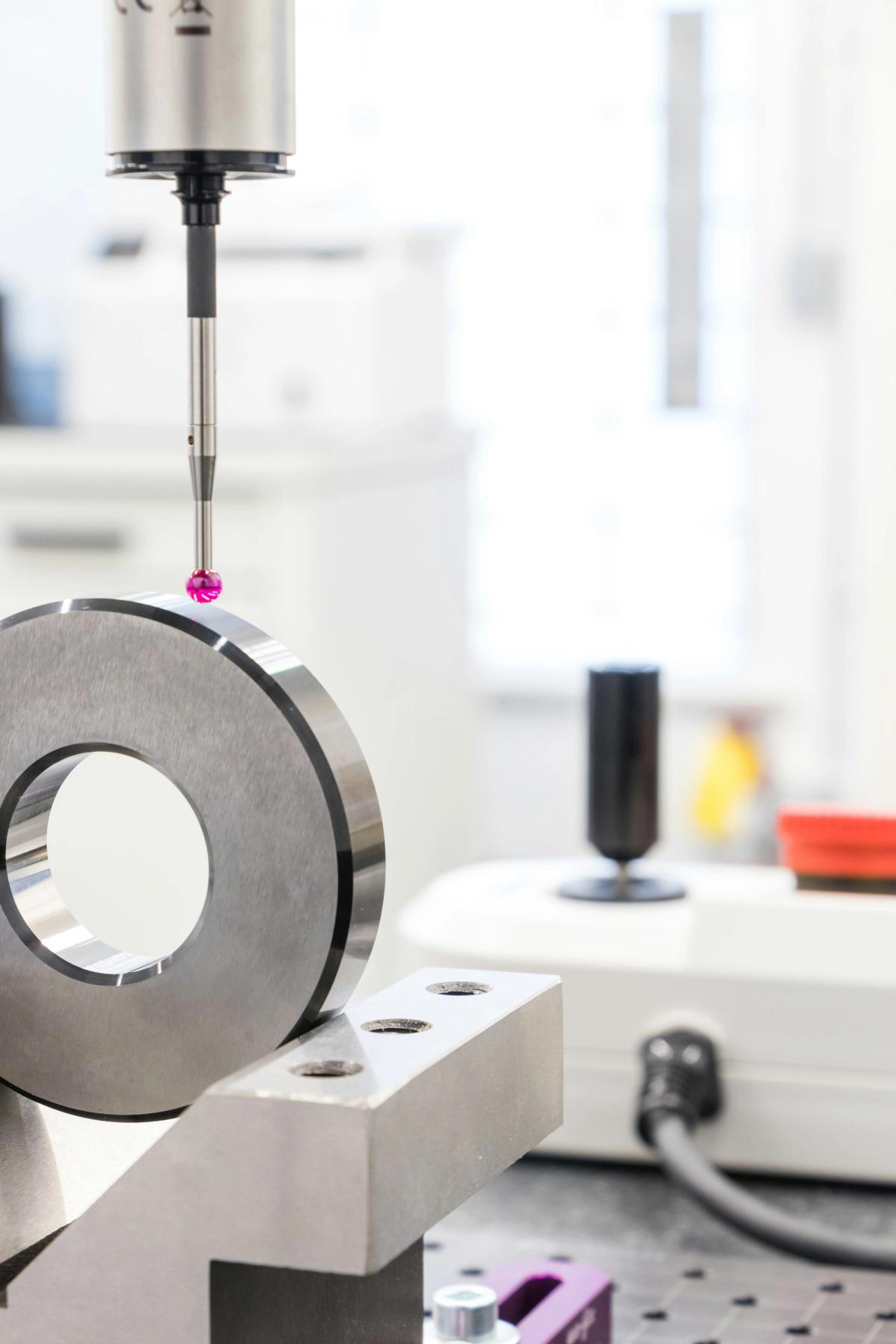
Hexagon released PC-DMIS 2026.2 on October 29, 2026, adding specialist gear-inspection functions alongside changes to point-cloud processing, edge measurement and model-based inspection. The new Specialised Geometries application groups complex-feature measurement into a modular workflow. Its first modules cover cylindrical gears and unknown gears; blade and impeller inspection are planned for later releases.
For metrology departments working with a coordinate measuring machine (CMM), the licensing model is significant. Hexagon says users can license geometry modules separately rather than adopting one comprehensive specialist package. The release does not state module prices or whether earlier PC-DMIS licenses carry any entitlement.
Gear inspection gets dedicated modules
Traditional CMM inspection can verify many gear-related dimensions using general feature measurements. Specialized gear assessment, however, requires a measurement strategy consistent with the intended tooth form and inspection standard. Hexagon's October 29 media alert presents its Cylindrical Gear and Unknown Gear modules as a consolidated way of handling gear geometry within the PC-DMIS environment.
The announcement documents no traceable comparison of measurement uncertainty with specialist gear-measuring machines and does not list every supported gear parameter or standard. Shops considering the module need to check the tooth forms, reference datums, report requirements and probe strategy supported by their configuration. The blade and impeller modules have no delivery date or full feature set yet.
AI Patch edge detection and faster scan handling
PC-DMIS 2026.2 combines several previous artificial-intelligence edge-detection approaches into an AI Patch method intended for edges that are difficult to measure with conventional routines. Hexagon's product documentation also lists a per-command training-data capture setting, so programs can collect relevant images more selectively.
For large scans, Hexagon reports faster point-cloud import and more informative scan visualizations. Its product page describes improvements to STL import, different scan-patch colors and the export of deviation data. Performance will still depend on scan volume, hardware and the inspection program, and the October media alert publishes no independent benchmark across CMM configurations.
QuickFixture now supports modeling fixture hardware directly within a measurement routine and adds on-screen controls for positioning it, which helps programmers describe how a component is held relative to the probe path. A modeled fixture remains a planning aid: machine clearance, real clamping positions and collision risk must still be confirmed in the physical inspection setup.
A new AutoSphere strategy allows scanning rather than only discrete touch-probe points for supported spherical measurements. Its usefulness depends on the form characteristic being assessed and the capability of the attached sensor.
PMI and QIF support tighten the link from design to inspection
Hexagon has expanded support for STEP AP242 product manufacturing information and QIF-based digital-thread workflows. Semantic PMI can carry machine-readable dimension and tolerance information from the design model, while inspection planning converts that information into executable measurement work.
The goal is to reduce manual re-entry and help trace the relationship between CAD and CMM results, but the integrity of that relationship still depends on source-model quality and review of generated routines.
The update also strengthens Teamcenter integration and adds controls to PC-DMIS Protect for certified inspection routines. Such controls help regulated manufacturers distinguish approved programs from unapproved revisions, though they do not by themselves establish compliance with a customer's quality system. Hexagon's community release note describes additional enhancements to inspection and sensor workflows.
PC-DMIS 2026.2 has been available since October 29. Whether the gear modules and edge-detection changes pay off will depend on each site's machines, software entitlements, workpieces and acceptance criteria.