A robot can repeat the same loading motion thousands of times, provided each component arrives where the program expects it. The harder task is finding a part that has moved, rotated or been obscured by its neighbours.
KUKA's iiQKA.AI Vision, announced on 8 October 2026, is designed to bring that visual decision-making closer to the robot controller. The software combines two- and three-dimensional object recognition, localization and gripping information within KUKA's automation environment, rather than treating vision as a separate programming system.
The product is not a new CNC machine or an independently demonstrated machine-tending cell. KUKA lists bin picking, assembly, quality inspection and depalletizing among its applications.
CNC machine tending is a plausible related use, but a machining shop would still need to engineer how parts are presented, gripped, loaded and released. Keeping that distinction clear is important: a vision package can identify a workpiece without proving that the complete loading cycle will be reliable.
Vision processing inside the robot-control environment
KUKA says iiQKA.AI Vision is configured in iiQWorks, its engineering environment, through a graphical interface with drag-and-drop steps, templates and guided setup. The system processes images or 3D point clouds to identify parts and calculate position, orientation and gripping information. Those results are passed to the robot application.
The practical change is fewer separate interfaces for teams that would otherwise connect a vision computer, image-processing software and robot program.
The computing function uses the KUKA AI Extension Platform, an integrated unit based on NVIDIA technology. According to the manufacturer, this arrangement removes the need for a separate industrial PC for image processing.
It does not mean a vision application works without cameras or application-specific integration. Sensors, optics, lighting, calibration and grippers still have to suit the parts and the cell. Nor does controller-side processing, by itself, establish a measured reduction in commissioning time.
The distinction between 2D and 3D matters when selecting a task. In a fixed tray, a two-dimensional image may provide sufficient information to distinguish and locate components. A bin of overlapping castings or variably oriented blanks may require depth data and a more sophisticated gripping strategy. KUKA describes object detection and grasp-point calculation, but the published material does not provide a public, application-by-application comparison of recognition accuracy, failed picks or cycle-time variation.
The software's integrated workflow may be attractive to engineering teams already using compatible KUKA robots and controls. Compatibility still needs to be established for each installed controller, camera and software configuration. An apparently simpler user interface does not eliminate the need to verify coordinate frames or confirm that the vision result corresponds to the object the robot is about to handle.
Machine tending demands a complete handoff—not just successful detection
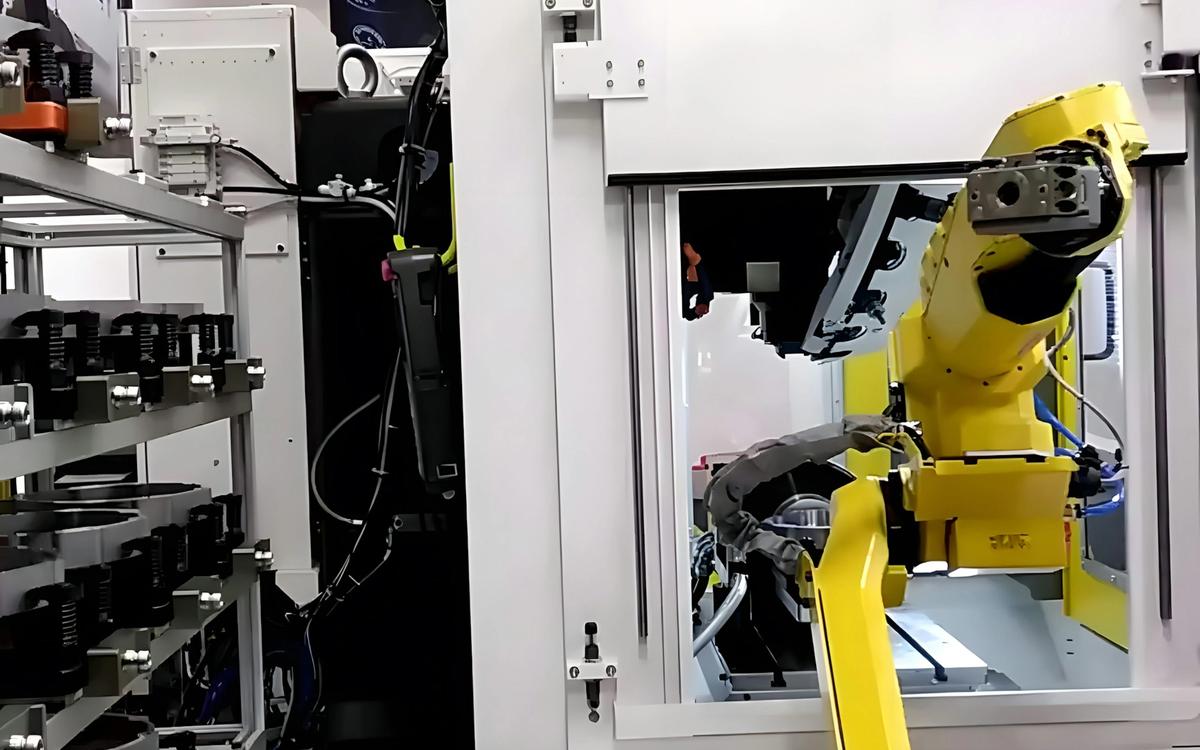
Consider a CNC lathe fed from a tray of unfinished blanks. The robot must identify the correct blank, pick it in a usable orientation and present it to the chuck or fixture. Only after the machine confirms safe clamping can the process continue.
Once machining finishes, the system may also have to distinguish the completed component from the incoming blank, move it to an accepted location and handle an interrupted cycle. Image recognition is one decision among several machine, robot and safety interlocks.
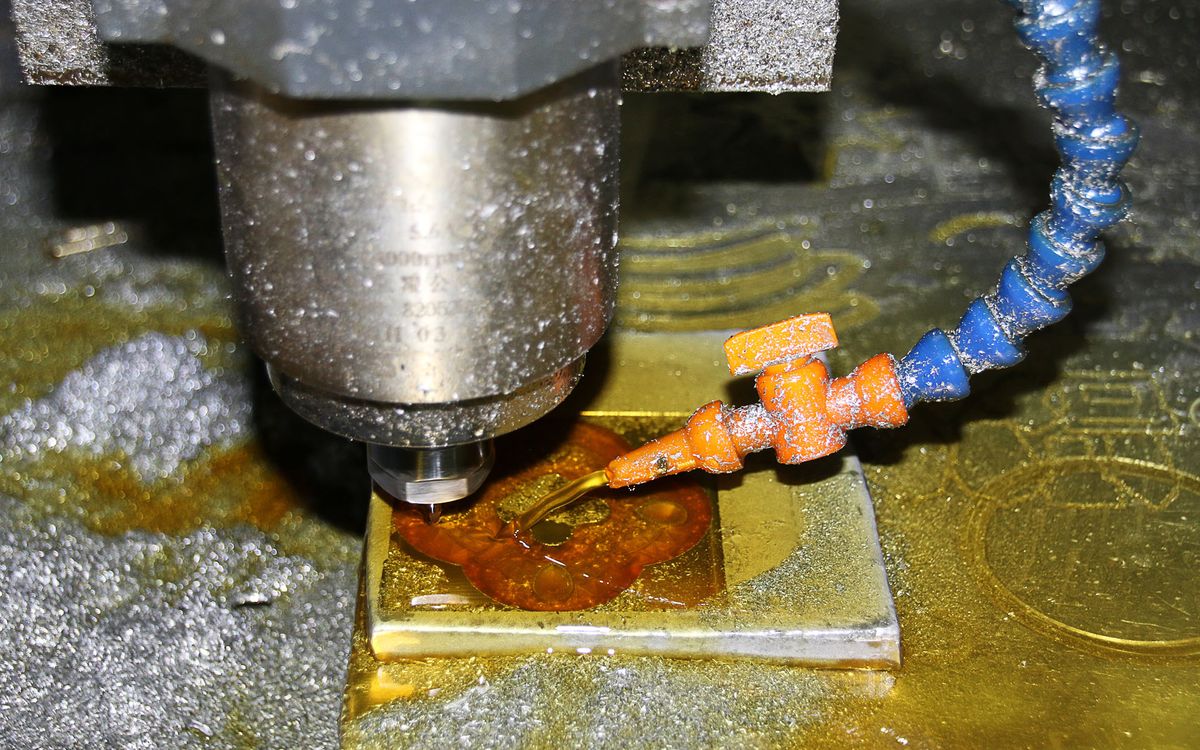
A vision system therefore needs an application test based on actual workpieces. Reflective turned surfaces, dark coatings, coolant film and loose chips may alter the quality of image data. Even if a supplier advertises robustness under varying light conditions, a shop needs evidence from the lighting, fixturing and part variation it will really encounter. The relevant figures are not only successful recognitions in a demonstration, but also failed-pick recovery, part damage, worst-case cycle time and how often an operator must intervene.
Robot-guided quality inspection raises a different requirement. A system that detects a feature or visible defect is not automatically a calibrated dimensional measurement system. It must be clear what is being measured, against which acceptance rule, and whether the sensing arrangement provides the traceability and uncertainty required by the drawing.
KUKA identifies quality-control uses for its software; the product announcement does not establish metrology performance for a particular CNC-produced component.
The safety assessment remains separate from the vision model's prediction. A calculated gripping position cannot substitute for validated robot reach, collision avoidance, machine-door interlocks or fixture confirmation. Engineers considering unattended operation need defined recovery behaviour if the part is unrecognized, dropped, misloaded or left inside the machine after an interrupted program. Those conditions determine whether the cell can resume production without creating a new hazard or defective component.
KUKA presented iiQKA.AI Vision at NVIDIA GTC Berlin on 20–22 October as part of its wider physical-AI demonstrations. That event followed the 8 October product announcement; a 21 October industry report should not be mistaken for the original release date.
Public descriptions establish the software architecture and target applications, but do not supply an independently measured payback, reliable-pick percentage or cycle-time improvement for a CNC machine-tending installation.
For CNC Outlook readers, the useful development is the move toward a more integrated route from image data to robot action. Whether it makes a particular machine-tending cell simpler will depend on part presentation, hardware compatibility and the handling exceptions a shop must solve. A credible next demonstration would show an entire production cycle on representative components, including failures and recovery—not only a robot successfully locating a part.