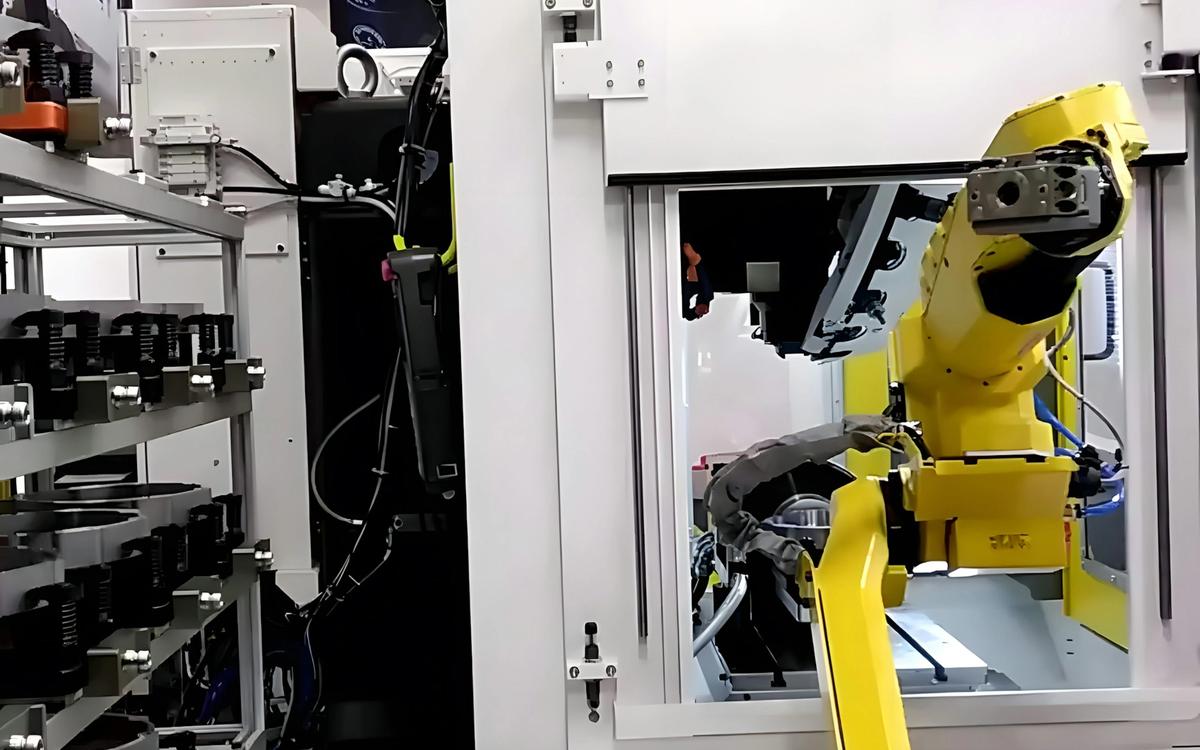
Inbolt's 2026 expansion announcement is a funding story with a technical question behind it: can existing industrial robots handle parts whose positions change without adding complicated dedicated fixtures? Vision may locate a workpiece, but machine tending is not complete until it is gripped, clamped and safely processed.
The company is positioning its technology as a way to add perception to existing industrial automation, rather than redesign every production cell around one perfectly fixed part presentation. That can be relevant in assembly and machine-tending environments where maintaining exact locations requires complex fixtures.
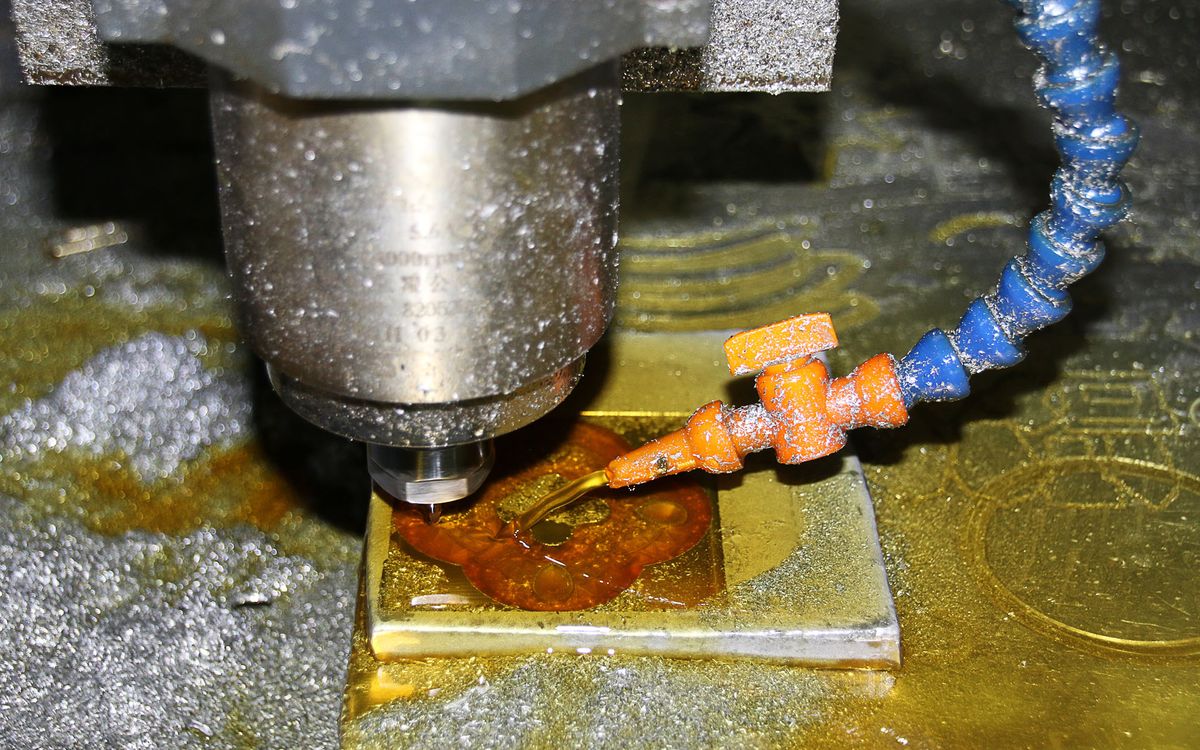
An important engineering constraint is the gap between visual localization and usable gripping. A vision system can calculate the position of a component, but a gripper still has to approach it without colliding with surrounding items and hold it securely during acceleration. For oily or irregular CNC blanks, the gripping method and the location of contact surfaces should be defined before introducing vision guidance. Otherwise the robot may recognize parts that it cannot reliably move.
From visual location to a verified grip
For CNC shops, the distinction is between the robot finding a blank and the machine safely machining it. Vision can help determine a gripping position, but the part still needs to be placed in a chuck or fixture with reliable orientation and clamping confirmation. Misplacement is not simply a pick failure: it can cause a collision, poor dimensional results or damaged tooling.
A robot that recognizes a blank but cannot grip it reliably has not solved the handling problem.
The value of adaptive positioning therefore depends on processing time, sensor reliability and predictable recovery after an unsuccessful detection. A vision system might reduce fixture complexity while increasing the time taken to identify each part. The net result should be measured for the actual component family and work-cell arrangement. A useful CNC pilot would compare a fixed-position loading process with a vision-guided alternative using the same range of part variation. Measure completed cycles, first-pick success, errors requiring intervention and damage or scrap. Include lighting changes, greasy surfaces and the presentation of both accepted and rejected blanks.
Financial investment in a robotics supplier can support product development and market expansion, but it should not replace technical due diligence by the customer. Machine-tending cells are often expected to run for years with limited operator attention.
What the funding does—and does not—establish
A manufacturer should ask about software licensing, spare sensors, updates, calibration procedures and who is responsible when the robot controller and vision system behave differently after an update. These support arrangements can influence uptime as much as the nominal detection performance.
Inbolt's reported funding also points to investor interest in updating established industrial robots with new perception software. Funding alone is not evidence of field performance. Prospective users should distinguish an installed production reference from a demonstration, and ask how systems are supported, recalibrated and updated over time.
The company's funding supports its development plans, not a measurable return for every machine shop. The relevant evidence is an extended trial showing first-time picks, recovery after errors and safe, repeatable machine handoffs across the real part mix.